
A toast that broke the ice
For many people in the West, the first real encounter with baijiu came in 1972. That February, when President Nixon visited China, Premier Zhou Enlai raised a glass of Maotai at the state banquet, and the moment was broadcast around the world1. More than half a century later, baijiu is no longer just a mysterious guest at diplomatic dinners. It is turning up in Chinese restaurants, cocktail bars and friends' dining rooms in many countries.
Baijiu is often described as one of the most widely consumed spirit categories in the world, yet for many people outside China it is still unfamiliar. The aroma is powerful, the strength is high, and it is drunk differently from whisky or vodka. Lifting that first small cup can feel a little uncertain.
How to enjoy it abroad
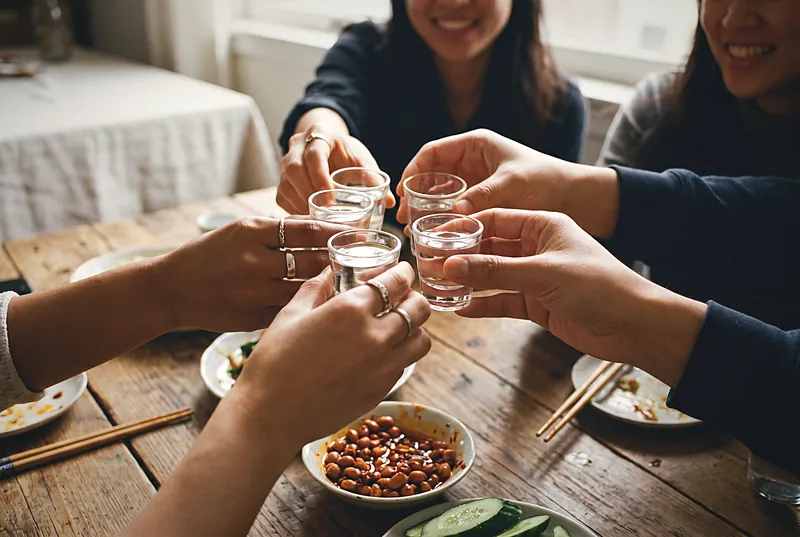
Room temperature, small cups. Baijiu is usually served at room temperature, without ice, in a small cup. Smell it first, then take a small sip and let it rest on the tongue; the aromas open up slowly.
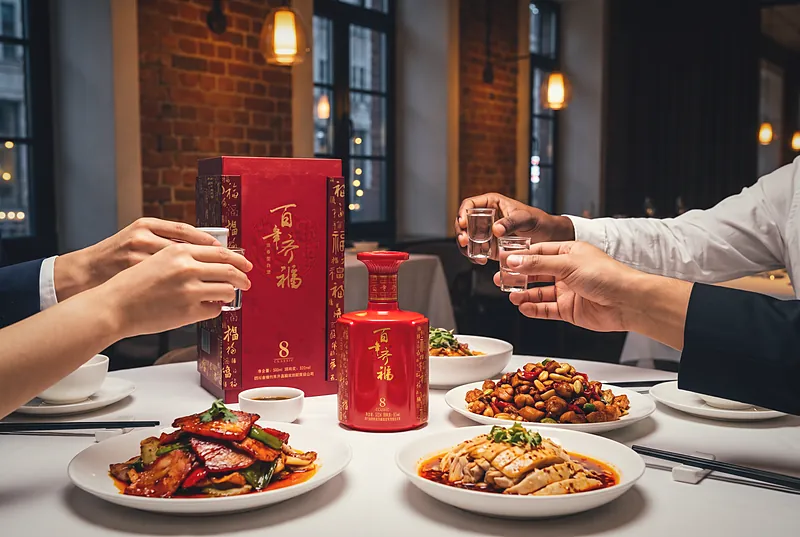
Drink it with food. In China, baijiu almost always comes with a meal. Strong-aroma baijiu is especially good with Sichuan cooking: twice-cooked pork, "mouth-watering" chicken or kung pao chicken stand up well to its rich pit aroma. Without Sichuan food, dumplings, roast duck or simple cold dishes all work.
Toasting etiquette. Ganbei literally means "dry the cup", but at today's tables a small sip is a perfectly gracious way to join a toast. When toasting an elder or a host, hold your cup slightly lower than theirs as a sign of respect. Above all, respect everyone's choice, and never press anyone to drink.
In recent years bartenders have also begun using baijiu in cocktails, which gives newcomers an easy first step. Neat or mixed, each has its own pleasure.
Two bottles from Mianzhu
Qifu's spirits are now exported to Europe, Africa and Asia, and we have an EU contact in Belgium.
If you are in Sweden, you can find Shun Tun at Systembolaget, the state-owned retailer2. It is our export bottling, a strong-aroma baijiu at 52% vol in a 500 ml bottle, and a good place for newcomers to start, especially alongside a table of Sichuan dishes.
For reunion moments such as Spring Festival or Mid-Autumn, Chinese families abroad and their friends also bring Bainian Qifu · 8 to the table: a red bottle in a red box with gold calligraphy, made from five grains, smooth on entry with a lingering sweetness and a nutty, caramel-like finish. However far from home, opening it can feel like hearing a familiar accent.
When baijiu travels abroad, it carries not only a spirit but a way of sitting together and sharing. Wherever you are, please follow local laws, sip slowly, and drink in moderation.