News from the west
In the second century BC Zhang Qian was sent by Emperor Wu of Han to the Western Regions, a journey later historians described as "opening the way". He brought back not only geography and diplomacy but news of an unfamiliar drink. The Records of the Grand Historian says of the lands around Dayuan:
They make wine from grapes; the rich store over ten thousand shi, and it keeps for decades without spoiling.
— Sima Qian, Records of the Grand Historian1
Wine from grapes that could be kept for decades was a novelty in the Central Plains, where people brewed from grain. Han envoys later brought back grape and alfalfa seeds and planted them near the imperial palaces. A road linking east and west became a channel for wine and brewing knowledge as well.
The name "Silk Road" came much later, coined by the German geographer Ferdinand von Richthofen in the nineteenth century. In 2014 "Silk Roads: the Routes Network of Chang'an-Tianshan Corridor" was inscribed on UNESCO's World Heritage List2.
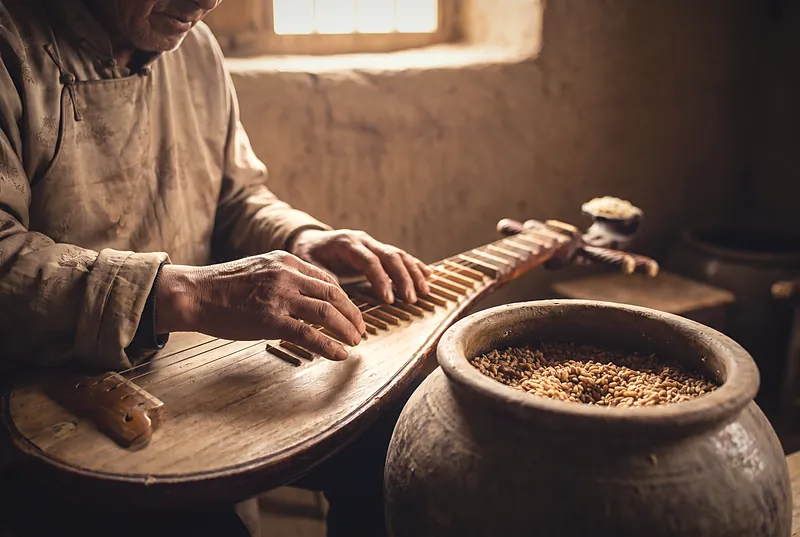
Gaochang's method and the pipa of Liangzhou
By the Tang dynasty the scent of wine along the route was stronger still. According to historical compilations such as the Cefu Yuangui, when Tang forces took Gaochang in 640, they brought back seeds of the "mare's-teat" grape along with the local winemaking method. Emperor Taizong is said to have adjusted the recipe himself, producing wines "of eight colours" that he shared with his ministers3.
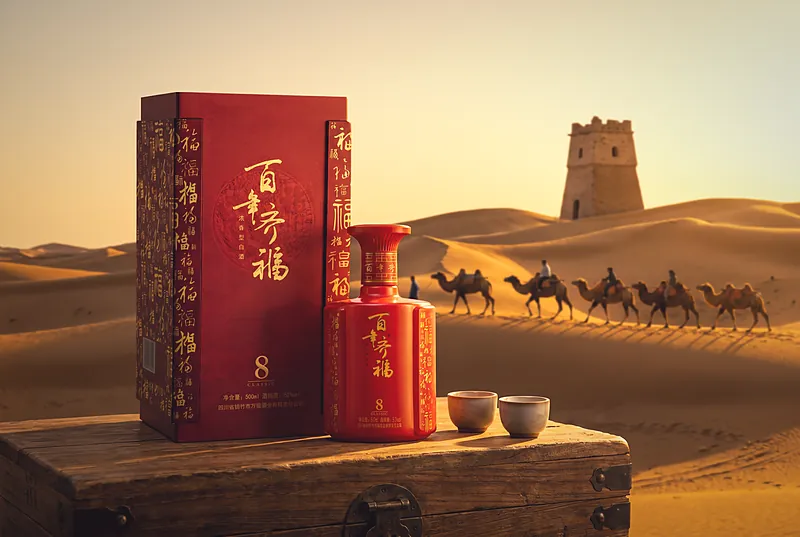
Wine from the west also flowed into Tang poetry. Wang Han's famous line about "fine grape wine in luminous cups" is set in Liangzhou on the Hexi Corridor. Camel bells, beacon towers, the pipa and wine still make up the most vivid picture of the Silk Road in the popular imagination.
Wine never travelled in only one direction. The Central Plains tradition of brewing from grain with qu starter also spread outward with merchants and envoys. Different lands, different grains and fruits, each produced its own flavours.
Coming from the west, going west
Two thousand years ago wine came from the west. Today Chinese baijiu is going west.
Qifu's home, Mianzhu, lies at the foot of the Longmen Mountains on the north-western edge of the Chengdu Plain. Our spirits are now exported to Europe, Africa and Asia, with an EU contact in Belgium. Shun Tun, our export bottling, is a strong-aroma baijiu at 52% vol in a 500 ml bottle, and it is listed at Systembolaget, Sweden's state-owned alcohol retailer4. The road from the pits of Mianzhu to a Nordic shelf no longer runs on camels, but it still needs patience and trust.
The further a cup of wine travels, the more it helps people see one another. Whether in Chang'an, Liangzhou or Stockholm, we hope you enjoy it in small cups, and in moderation.