
Bamboo by the Mian River
The name Mianzhu has a fresh, gentle sound to it, and its meaning matches.
According to local records, Mianzhu became a county in 201 BC, the sixth year of the founding Han emperor, and took its name from the bamboo that grew thickly along the Mian River, today's Mianyuan River1. Mianzhu is also the name of a bamboo species, so place and plant have mirrored each other for more than two thousand years.
The town has a heroic page in history too. At the end of the Three Kingdoms period, Zhuge Zhan, son of the famous strategist Zhuge Liang, led the defence at Mianzhu against the Wei general Deng Ai and died in battle together with his own son, Zhuge Shang. Mianzhu still has a shrine honouring the two.
Mianzhu is also a town of colour. Its woodblock New Year prints began in the Song dynasty and flourished in the Ming and Qing. They are counted among China's four great New Year print traditions, alongside Yangliuqing in Tianjin, Taohuawu in Suzhou and Yangjiabu in Weifang, and in 2006 they were included in the first list of China's national intangible cultural heritage2.
Mountains, water and spirits
Mianzhu sits on the north-western edge of the Chengdu Plain with the Longmen Mountains at its back. Glacier and snow melt feed clear springs and rivers, rainfall is over 1,200 mm a year, and the soil holds sticky, slightly acidic yellow clay. Good water, good earth and a mild, humid climate set the stage for brewing.
The brewing history runs deep. Han-dynasty relics connected with brewing have been found in the area. In the Tang dynasty, Jiannan Shaochun from this land was widely known, and records mention spring wine sent as tribute from Jiannan in 779 AD, a heritage shared by the whole Mianzhu region. Local legend also tells of Li Bai trading his sable coat for wine here. The Southern Song philosopher Zhang Shi (1133–1180) was born in Mianzhu, adding a scholarly note to the town's story.
In 2019 the China Alcoholic Drinks Association named Mianzhu a "World Fine Spirits Characteristic Region". Bamboo, water and spirits have become the town's three defining notes.
Where Qifu belongs
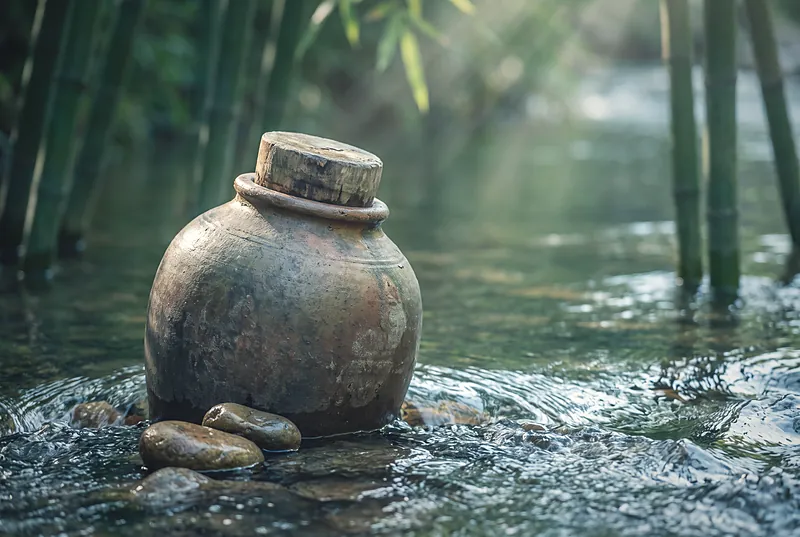
Qifu grew out of this land. Since 1978 our family has tended yellow-mud pits at the foot of the Longmen Mountains, and the company was formally registered in 2001. Our old pits host more than a thousand microbial species. The grain ferments in them for about two months before traditional zeng distillation, collection by quality and slow ageing in clay jars.
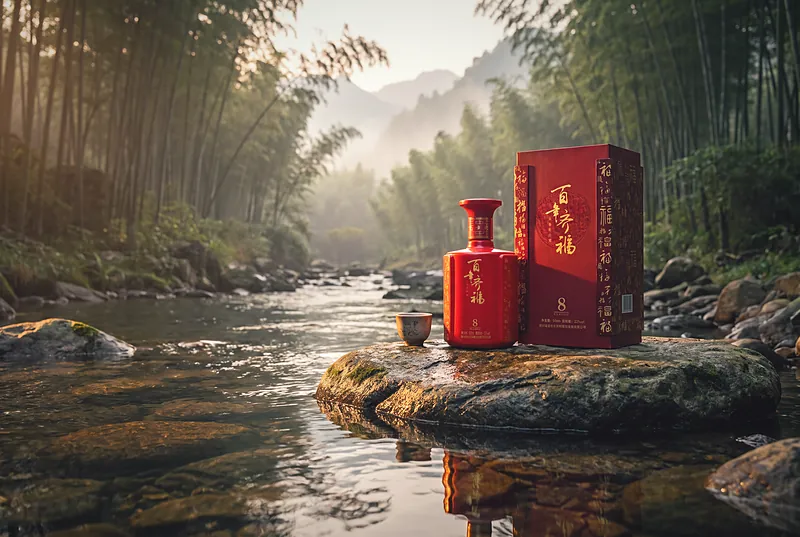
From this town of bamboo and water, Qifu travels further: our flagship Bainian Qifu · 8, five grains at 52% vol in a red porcelain bottle with gold calligraphy, carries something of Mianzhu with it, and our export bottling Shun Tun is listed at Sweden’s Systembolaget. A bottle takes Mianzhu’s bamboo and rivers to tables far away.
Our family motto reads, roughly: cultivate virtue and craft together, hold honesty as the foundation, strive without rest while learning from the old ways, and let character stand above the spirit. It is also our way of paying respect to this land. If you ever visit Mianzhu, walk among the bamboo, look at the rivers and the New Year prints, and then take a small, slow sip of the local spirit, in moderation, to feel the unhurried pace of this spirits town.