
At a Chinese banquet you will often hear someone say wo xian gan wei jing: "I'll drink first, as a mark of respect." The speaker drains their cup, and the other person may drink as much or as little as they like. The point of the phrase is not the draining but the respect: I show my sincerity first, and you need not force yourself. Understand that, and you understand most of Chinese toasting etiquette.
Respect and deference in the ancient rites
Drinking in China has long been bound up with ritual. The Book of Rites sets out how a younger person should behave when drinking with an elder:
When attending an elder at drink, rise as the wine comes, and bow to receive it at the vessel.
— Book of Rites, "Summary of the Rules of Propriety" 1
When the elder offers wine, the younger person stands and receives it with a bow at the place where the wine vessel stands. Only after the elder politely declines the formality does the younger return to their seat to drink, and they do not drink until the elder has finished. Details more than two thousand years old all point to one idea: drinking involves rank and seniority, but also consideration and modesty. Many of today's toasting customs can be traced back to these rules.
Getting it right at the modern table
Business banquets vary from region to region, but certain courtesies are shared.
First, order. The host usually raises a glass first to welcome the guests, the guests then toast the host in return, and after that people toast one another. Elders and guests of honour are generally toasted first.
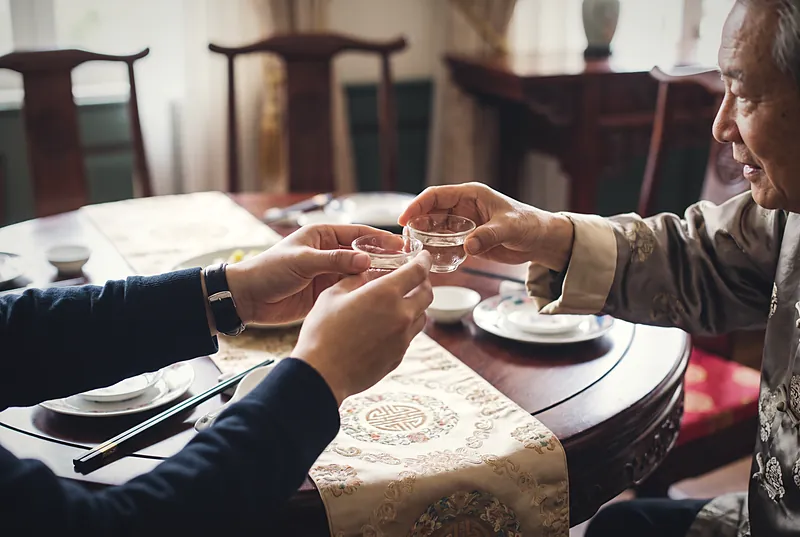
Second, posture. Stand when you toast. Hold the cup with both hands, or with the right hand while the left supports the base. When clinking with an elder or a guest of honour, keep the rim of your cup a little lower than theirs as a sign of respect.
Third, words. A sentence or two said sincerely beats a long speech: thanks, good wishes, hopes for working together, and no more.
Fourth, no pressure. "I'll drink first" expresses your own goodwill; it is not a demand on anyone else. A guest who toasts with tea or only takes a sip deserves the same respect. It should go without saying at any banquet that nobody drives after drinking.
A bottle that speaks for the host
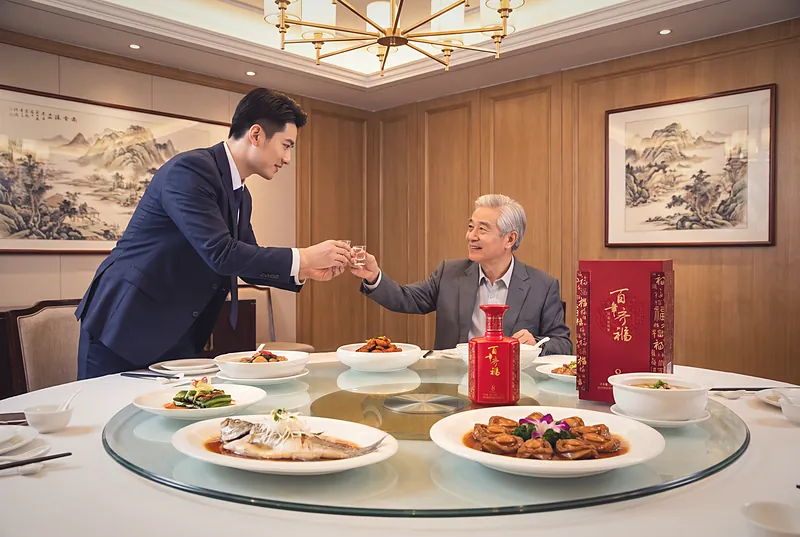
At a business dinner, the bottle on the table works a little like the host's calling card. Bainian Qifu · 8 comes in a red bottle and red gift box with gold calligraphy, festive without being showy on a round banquet table. Inside is a 52% vol strong-aroma baijiu distilled from five grains (sorghum, wheat, rice, glutinous rice and corn). It enters smoothly, with lingering sweetness, a full pit aroma and a nutty, caramel-like finish, and it rewards slow sipping between toasts.
The Qifu family motto says "character above the wine." A toast is always really to a person, honouring their position and, even more, the relationship. If guests from abroad are at the table, explain what "I'll drink first" really means, then tell them to drink at their own pace.
A good banquet ends with everyone clear-headed and content. Pour small, sip slowly and drink responsibly. That is the best etiquette of all.